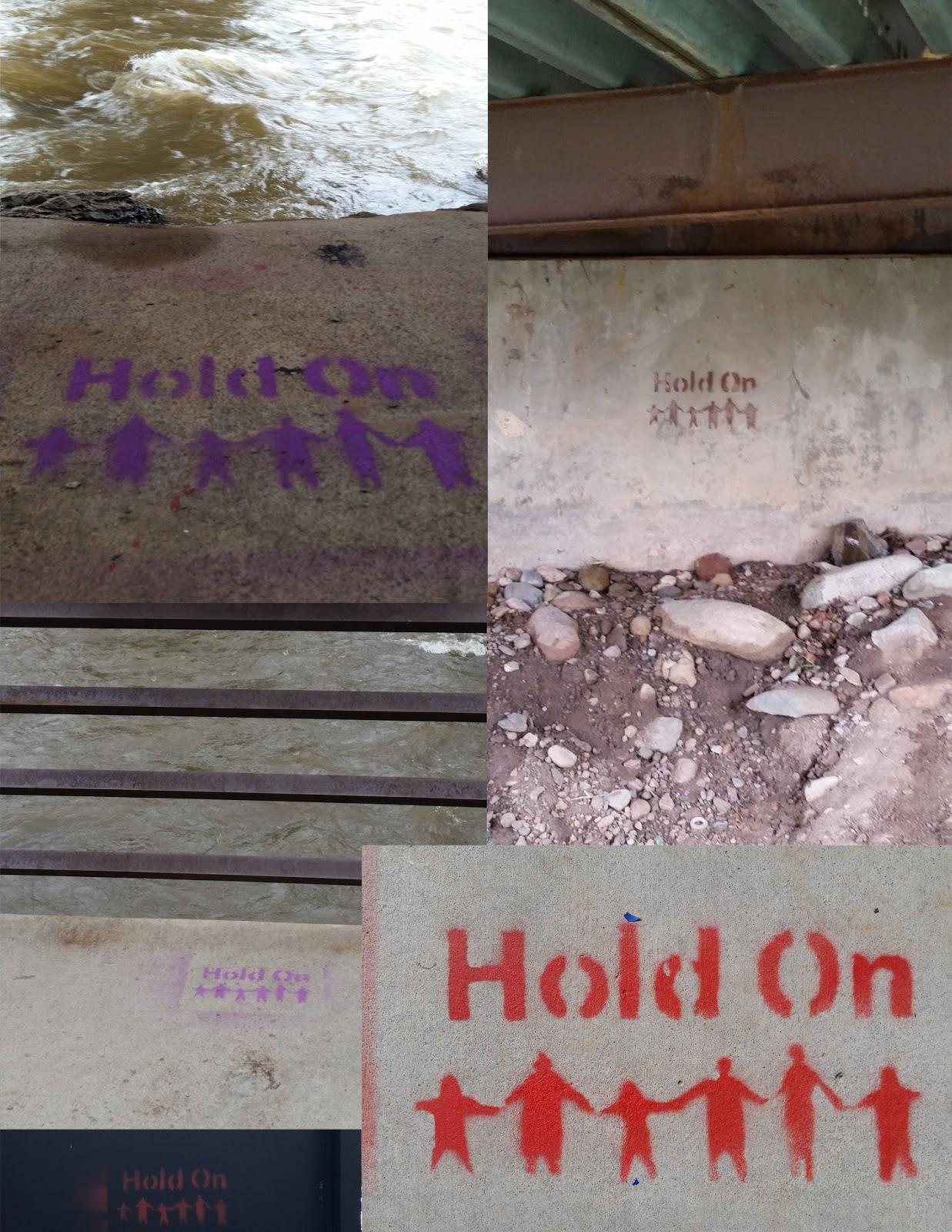
Check out these examples from our exhibition a few years ago!
GET STUFF DONE!
Conferences and Project Work time
Philosophy Statement and Project Proposal due tomorrow!
Wednesday, February 26, 2020
Tuesday, February 25, 2020
Tuesday, February 25th
Project Examples:
Dana’s project: “Cuida”
Jessica's Project "Whichever Road Taken"
(with Intertextuality Annotated!)
Continue Work Time and Conferences!!!
Philosophy Statement and Project Proposal (due Thursday for Critique/Tune)
HONORS: Cat's Cradle Seminar next Wednesday March 4th
Monday, February 24, 2020
Monday, February 24th
THIS WEEK: Project Work Time and Conferences
Everyone will conference with me by next Tuesday about their classwork/grade as well as project ideas.
The Project!
Student Examples:
MAX POEM (goes with above visual)
(DUE THURSDAY, FEB 27th for Critique/Tune)
TIPS:
1. Read your entire comp book to discern your emerging themes and beliefs. Entire chunks of your philosophy statement might already be lurking in there!
2. You DO NOT have to just pick a philosophy to espouse. Articulate your principles from a place of personal authenticity, which might be a hybrid of multiple philosophical expressions. This might include a degree of uncertainty, and that is OK!
3. Write your philosophy statement BEFORE you devise a project idea.
4. Identify your intertextual connections within the philosophy statement. This will help you to be thoughtful about how you are incorporating your references into the actual project.
5. Look at these student examples for guidance:
Friday, February 21, 2020
Friday, February 21st
Philosophize: Are religion and science compatible? Can they work together to illuminate meaning in our lives? Or do they contradict each other?
Starter 2.21 : Response to NOMA and the “Skeptic”:
React to the idea of “Non-overlapping Magisteria” and/or Michael Shermer’s article. Identify a specific passage in the article and agree or disagree with it.
Stephen Jay Gould's "NOMA" Non-overlapping Magisteria
Read Gould's original article (linked) for more depth of information!
Non-overlapping magisteria (NOMA) is the view advocated by Stephen Jay Gould that science and religion each represent different areas of inquiry, fact vs. values, so there is a difference between the "nets" [1] over which they have "a legitimate magisterium, or domain of teaching authority," and the two domains do not overlap.[2] He suggests, with examples, that "NOMA enjoys strong and fully explicit support, even from the primary cultural stereotypes of hard-line traditionalism" and that it is "a sound position of general consensus, established by long struggle among people of goodwill in both magisteria."[1] Still, there continues to be disagreement over where the boundaries between the two magisteria should be.[3]
Quote from Gould: "Our failure to discern a universal good does not record any lack of insight or ingenuity, but merely demonstrates that nature contains no moral messages framed in human terms. Morality is a subject for philosophers, theologians, students of the humanities, indeed for all thinking people. The answers will not be read passively from nature; they do not, and cannot, arise from the data of science. The factual state of the world does not teach us how we, with our powers for good and evil, should alter or preserve it in the most ethical manner"
Watch Rick Warren's TED Talk"A Life of Purpose"
- How does his faith give him purpose?
- Are his arguments convincing?
- ven if you are not religious, what can we learn from his example?
4 corners
Religion and science are inherently incompatible.
A religious worldview gives life more meaning than a scientific worldview.
Journal 2.21: Reflect on today's deconstruction.
How do religion and other forms of spirituality give meaning and purpose to human life? How does science? Can the two work together to illuminate meaning or do they contradict each other? Which gives your life more meaning?
Thursday, February 20, 2020
Thursday, February 20th
Much gratitude to Laci, for teaching us today. Take it in, kids.
If there is extra time:
If there is extra time:
4 corners
Religion and science are inherently incompatible.
A religious worldview gives life more meaning than a scientific worldview.Tuesday, February 18, 2020
Wednesday, February 19th
VERBAL STARTER: Revisit Art
SHARE OUT IDEAS ABOUT "The Creation"
What claims could we make about its meaning?
Vonnegut, "Yes, We Have no Nirvanas"
SHARE OUT IDEAS ABOUT "The Creation"
What claims could we make about its meaning?
Vonnegut, "Yes, We Have no Nirvanas"
DISCUSS
What is Kurt Vonnegut's take on Transcendental Meditation? What is his tone? What is his message?
WHITEBOARDS
Make an interpretive claim about the author’s intention. SHARE
MEET the Maharishi…
What do you think of the idea of Transcendental Meditation?
JOURNAL 2.18: What were the results? Did the quiz tell you what you already knew? Did it surprise you at all?
For tomorrow (page 35 in your reader)
Thursday, February 13, 2020
Thursday, February 13th
How did yesterday go? Yes, you may all have an extension on film paragraph due to internet issues! Who might want to share their claim itself? Feel free to revise it for sophistication!
New questions for our study….
- How do religion and other forms of spirituality give meaning and purpose to human life?
- How does science deal with life’s great mysteries?
- Are religion and science compatible or at odds?
"Starter": What is the difference between religion and spirituality?
In pairs: Come up with a short list of phrases, words, sentences, quotes that you associate with each word: RELIGION, SPIRITUALITY
DISCUSS DIFFERENCES AND INTERSECTIONS"The Creation" by Eduardo Galeano
1. Illustrate the passage.
2. Make an interpretive claim about the passage
3. Discuss: What questions is Galeano answering? How does this passage relate to the questions of the week?HONORS: Check out Cat's Cradle if you haven't yet! Book Club seminar on March 4th
Subscribe to:
Posts (Atom)